


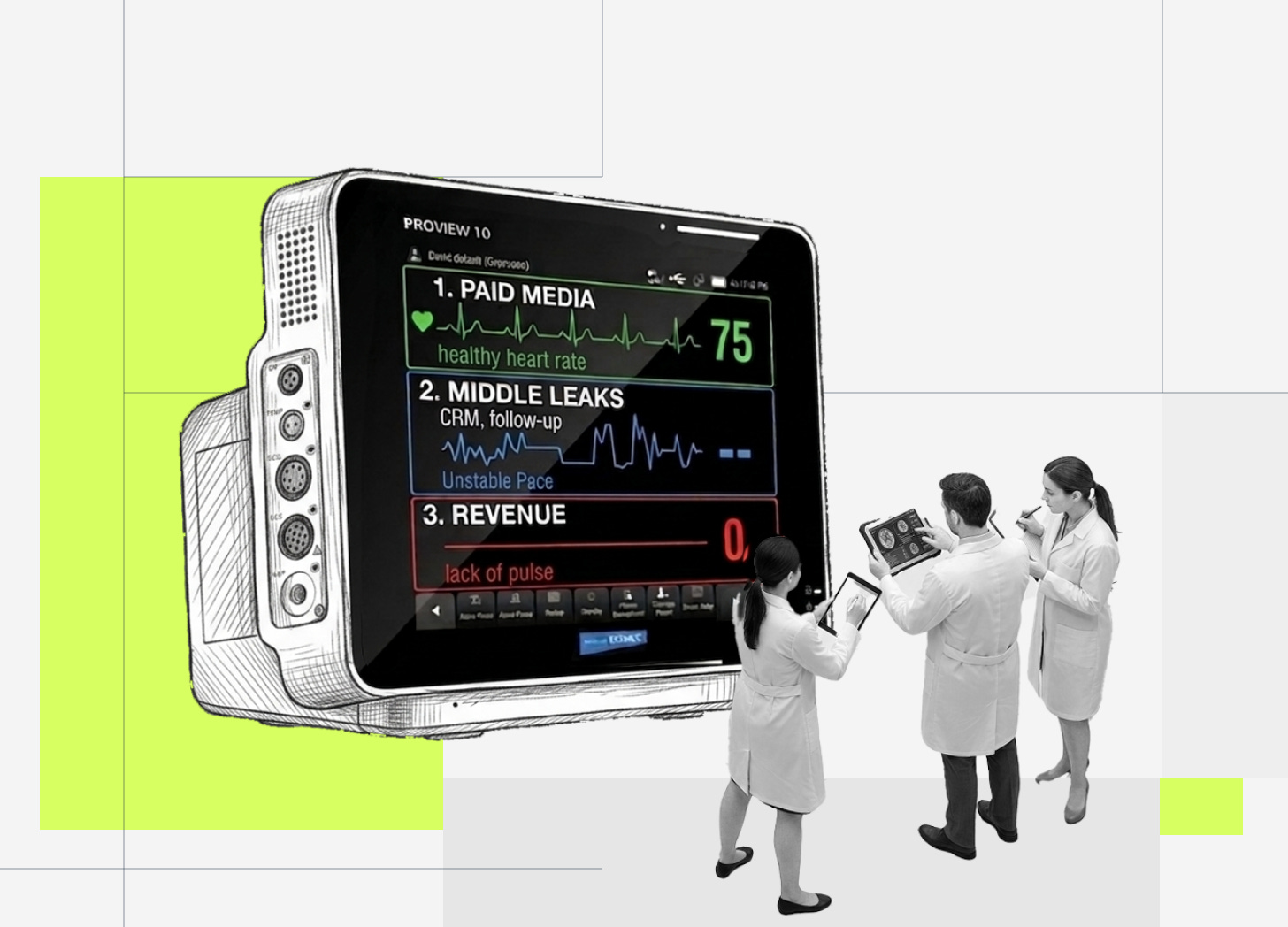
When you measure everything based on clicks & cookies, you over-index on direct-response channels. This is fine if you are selling SMB , freemium where the click > signup time is short & sales cycles are sub 30 days & average ACV is lower.
But when you are selling to enterprise buyers, they are unlikely to ‘buy’ because of a single ad or a single click. The process of ‘purchasing, evaluation & research’ takes months (sometimes years)
This is why enterprise marketers struggle to show direct impact of marketing.
You know LinkedIn matters, but your MTA platform shows zero pipeline.
You see CTV lift branded search, but HubSpot doesn’t show leads with utm_source= CTV (and it never will).
You feel programmatic warming up accounts, but Salesforce shows nothing because no one clicks / converts (at least in the same session).
You know outbound replies improve when paid is running — but attribution never reflects it. You don’t have a clean experiment.
You’re using a bottom-funnel measurement tool to understand a full-funnel system.
Here’s the model that actually works: the Dual-Track Attribution System.
It contains two parallel measurement tracks:
one for the business
one for the truth
And when you use both together, enterprise GTM finally becomes legible.
TRACK 1 — CAPTURE ATTRIBUTION (WHAT LEADERSHIP SEES)
Purpose: Report pipeline and revenue in the language the business understands.
This track is intentionally boring and traditional:
Last-touch attribution
Pipeline created
Opportunities sourced
MQL → SQL rates
Conversion-to-opportunity
Cost per qualified opportunity
Cost per sales action
This is the reporting model your CEO and CFO expect. It should stay straightforward.
But here’s the critical detail:
Last-touch attribution should only be used to evaluate direct response channels:
Google non-branded search
Google-branded search
Retargeting
Bottom-funnel paid social
Partner referrals
Outbound
If you try to judge CTV, upper-funnel LinkedIn, programmatic, events, or content using Track 1, you’ll conclude none of them work.
Direct Response / MTA attribution is essential — just not for all channels.
We have been nominated in the best B2B Newsletter category by Demand & Expand. Please consider dropping a vote for us if you get value from what we write
TRACK 2 — SIGNAL ATTRIBUTION (WHAT ACTUALLY DRIVES ENTERPRISE PIPELINE)
Purpose: Measure the signals that indicate demand is being created, nurtured, and shaped before the opportunity emerges.
This is the attribution model that reflects reality.
Here’s what it includes — and how to actually measure it:
Traffic Signals
1. Branded Search Lift
Your strongest signal of building familairtiy / trust & being part of the mental availability.
If people search for your brand, something caused it: CTV, programmatic, LinkedIn, content, events, outbound, category positioning.
How to measure it:
Pull weekly branded search volume from Google Search Console or your paid search platform.
Overlay it against paid media flighting (spend or impressions by week - keep in mind if you do impressions overlay, you may over index on high impression channels like display).
Run a simple correlation analysis in a spreadsheet.
Look for patterns: when spending increases, does branded search follow?
2. Direct Traffic Lift
Direct traffic = mental availability. It’s the clearest early indicator of buying interest.
How to measure it:
Pull weekly direct traffic sessions from HubSpot or GA4.
Compare against paid media activity by week.
Track new vs. returning direct visitors separately — returning visitors helps understand you are in a consideration set.
Account Signals
3. Account-Level Engagement
Move beyond individuals. Enterprise deals are won at the account level.
What to track:
Web visits per domain (we use SyftData)
Session depth (pages per session)
Pricing page visits
High-value page visits (demo, docs, case studies)
Number of unique contacts per account
Which accounts “heat up” after campaign bursts i.e. showing multiple hits
How to measure it: Tools like Syft (a partner we recommend), de-anonymize traffic and tie sessions to accounts. Build a weekly report showing account-level engagement trends, not just individual leads.
4. Buying Group Expansion
This is a signal most teams miss entirely.
If you see 3+ people from the same account visiting within a 14–28 day window, that is enterprise intent — even if nobody fills out a form.
How to measure it:
Use your de-anonymization tool to flag accounts with multiple unique visitors.
Set a threshold (e.g., 3+ visitors in 28 days) and create a “heating accounts” list.
Cross-reference against your target account list and open opportunities.
Activation Signals
5. Outbound Reply Rate Lift
If accounts exposed to paid media respond to outbound at a higher rate, that is a measurable impact.
We consistently see:
Higher open rates
Higher reply rates
More positive replies
More meetings booked
Better acceptance of gift-card InMail offers
Paid media isn’t creating a pipeline directly — it’s increasing the probability that outbound creates a pipeline. People buy from companies they are familiar with - see our trust & attention framework.
How to measure it:
Segment your outbound list into “exposed to paid media” vs. “not exposed.”
Compare reply rates, meeting rates, and positive response rates.
Your sales engagement tool (Outreach, Salesloft, Apollo) can provide this data; your paid media (i.e., LinkedIn Impressions) + de-anonymization tool provides the exposure metric.
6. Meeting and Opportunity Velocity
Measure whether meetings and early-stage opps accelerate during or after marketing campaigns.
Velocity shift is one of the strongest impact indicators in an enterprise.
How to measure it:
Track average days from first touch to meeting booked.
Track average days from meeting to opportunity created.
Compare velocity during high-spend periods vs. low-spend periods.
7. Correlation Analysis
Use time-series analysis to compare:
CTV impressions → branded search
LinkedIn impressions → direct traffic
Programmatic reach → repeat visits
Omnichannel bursts → account heating
This gives you probabilistic lift, which is the right form of truth for enterprise GTM.
How to measure it:
Export weekly data from each platform (LinkedIn Campaign Manager, CTV platform, GA4/HubSpot).
Align the data by week.
Run Pearson correlation analysis (Excel, Google Sheets, or any BI tool can do this).
Look for r-values above 0.5 and p-values below 0.05 — that’s a statistically significant relationship.
CASE STUDIES: WHAT THIS LOOKS LIKE IN PRACTICE
Example 1: LinkedIn Spend → Brand Traffic (B2B Payments Company)
A B2B payments company was running consistent LinkedIn campaigns but seeing zero attributed pipeline in their MTA platform. Leadership questioned the value of marketing & LinkedIn Ads to pipeline.
We ran a 27-week correlation analysis comparing LinkedIn spend to website traffic by channel.
Results:
Direct traffic correlation: +0.67 (significant relationship)
Organic search correlation: +0.57 (significant relationship)
45% of direct traffic variance was tied to LinkedIn spend. What this means, when we ran LinkedIn ads, organic (branded search) / direct traffic went up (in close relationship).
The insight: LinkedIn was invisible in Track 1 (MTA showed zero pipeline). But Track 2 revealed the signals: LinkedIn was driving the branded search and direct traffic that fed the DR channels.
Example 2: CTV Impressions → Search and Direct Traffic (Enterprise SaaS)
An enterprise company ran CTV as part of an awareness play. Attribution showed nothing. No leads coming from ‘CTV source’ (when was the last time you clicked on a CTV ad). CTV creates familiarity that shows up in other channels. We wanted to validate it with data not just vibes
We ran a correlation analysis between weekly CTV impressions and website traffic.
Results:
Organic search correlation: very significant
Direct traffic correlation: significant
CTV was generating measurable results, just not as form fills. The data showed a strong, statistically significant relationship between CTV impressions and high-intent website activity.
The insight: Track 1 said CTV was worthless. Track 2 revealed the signals: CTV was the engine behind the branded search lift.
HOW THE TWO TRACKS WORK TOGETHER
Think of it like this:
Track 1 = Who got them to convert? (Search, outbound, retargeting)
Track 2 = What signals indicated we were getting into the consideration set? (LinkedIn, CTV, programmatic, content, events, POV)
Pipeline is the lagging indicator. What actually led to the pipeline was dozens of conversations, ads, emails, sales conversations, events, and dinners. What makes an enterprise buyer pick up your phone, respond to your email, visit your booth at the tradeshow is a multitude of things that create familiarity & trust SO that they respond to you.
THE BOTTOM LINE
Most enterprise marketing teams aren’t failing at marketing. They’re failing at making sense of the marketing.
The Dual-Track model gives you:
A way to keep the business aligned
A way to measure influence honestly
A way to justify LinkedIn, CTV, and programmatic
A way to prove impact beyond attribution
A way to operate with confidence
You need both to win.
Want help building this for your team? [Book an attribution audit with 42 Agency]